

Bentley Continental GT Brake Pads and Rotors: Which Ones Fit Your Car
Dated : 19 Nov, 2026
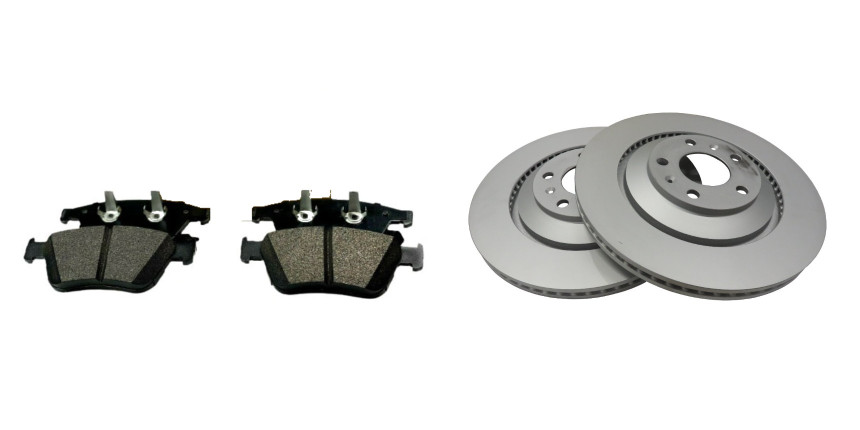
Your Continental GT shows a brake pad warning, or the steering wheel shakes when you slow down from highway speed. Before you order anything, there is one question that decides every part you buy: does your car have iron brakes or carbon ceramic brakes? Get that right and the rest is simple. This guide covers the 2004 to 2017 Continental GT, GTC and Flying Spur, which share their brake parts, with a short section at the end for the 2018-on cars.
Iron or carbon ceramic: how do I tell which brakes my car has?
Most Continental GTs left the factory with iron rotors. Carbon ceramic brakes were an option on later cars and came as standard on the Continental Supersports. The two systems use different rotors, different pads and different calipers, and nothing crosses over between them.
You can usually tell by looking through the wheel. An iron rotor is plain bright metal on the braking surface, and after rain or a car wash it picks up a thin layer of surface rust within hours. A carbon ceramic rotor is dark grey with a matte, slightly mottled finish and never rusts. If you are not sure, your VIN settles it: the build data lists the brake package, and we check it before any brake order ships.
This matters because iron pads must never go on carbon ceramic rotors. The wrong compound damages a ceramic rotor quickly, and those rotors cost many times more than an iron set.
Which brake pads fit the 2004 to 2017 Continental GT?
For cars with iron brakes, the Continental GT, GTC and Flying Spur of these years use the same pad sets:
- Front pads: Continental GT front brake pads 3W0698151AD, the latest number, which replaces the older 3W0698151R, 3W0698151B and 3W0698151A
- Rear pads: Continental GT rear brake pads 3W0698451N, which replaces 3W0698451J and 3W0698451D
Cars with carbon ceramic brakes take their own pads. The ceramic front pads are 3W0698151S, and the ceramic rear pads are 3W0698451E, which replaces the older 3W0698451B. If you have a Supersports or a car with the ceramic option, send us your VIN with the order and we will confirm both sets against your car.
Each pad set covers one axle, both wheels. Always change pads in axle sets, never one side on its own, or the car will pull under braking.
How do I know the pads or rotors are worn?
A Continental GT weighs around two and a half tons, so it works its brakes hard, and owners are often surprised how soon pads come due. These are the signs we hear about most:
- The pad warning light. The wear sensor has been reached. Plan the job soon, not someday.
- A grinding noise. The pad material is gone and metal is touching the rotor. Stop driving the car if you can, because every mile now damages the rotor.
- Vibration in the steering wheel or brake pedal when slowing from speed. This usually means uneven rotor thickness, and new rotors are the fix.
- A raised lip on the outer edge of the rotor. Run a fingernail across the face. A clear step means the rotor has worn down.
- Deep grooves or blue marks on the rotor face, a sign of overheating or a pad that has worn unevenly.
Every rotor has a minimum thickness stamped on it, usually on the hat or the edge. If a caliper reading is at or under that figure, the rotor has to be replaced, even if it still looks smooth.
Should I replace the rotors with the pads?
Very often, yes. On cars this heavy, the rotors are usually close to their minimum thickness by the time the second set of pads is due, and new pads on worn rotors bed in poorly, can make noise and wear out sooner. If the rotors are above minimum, smooth and do not cause vibration, a pad-only job is fine.
For the iron-braked cars, the front rotors are Continental GT front brake rotors 3W0615301K. Rotors are sold to suit the brake package on your car, so give us your VIN and we will confirm the rotor before it ships.
When you do the job, a few small things save a second visit:
- Check the wear sensor. A sensor that has been worn through, or set off the warning light, has to be replaced.
- Clean the caliper slides and pad seats, and use new hardware if the old clips are rusty or loose.
- Look at the brake fluid date. Most service schedules call for fresh fluid every two years; check your service book.
- Bed the new pads in with several firm stops from moderate speed, without coming to a full stop and holding the pedal on hot rotors.
Why won't the rear caliper piston push back?
This is the question we get most from owners doing their own rear pads. The Continental GT has an electric parking brake built into the rear calipers. The piston is driven by a small motor, so you cannot simply wind it back or push it in with a clamp. Forcing it damages the parking brake motor.
Before you start, a diagnostic tool that supports the Continental GT has to put the rear brakes into service mode, which retracts the pistons. Fit the new pads, then use the same tool to close the parking brake and set it again. If you don't have a suitable tool, this is the one part of the job worth handing to a shop.
What about the 2018-on Continental GT?
The third-generation Continental GT and GTC from 2018 on, and the Flying Spur from 2020, use a different brake system with different part numbers, so none of the parts above fit them. The front iron pads for these cars are 3SA698151C, which replaces 3SA698151A. The same rule applies: iron and carbon ceramic parts do not mix. You will find the pads, rotors and wear sensors for these cars in our Continental GT brake pads and rotors, 2018 on section, and the earlier cars in our Continental GT brakes, 2004 to 2017 section.
Get the right brake parts the first time
Brake parts on these cars look alike between years and packages, and a set that is close but not right means a car on a lift waiting for a second delivery. Everything listed here is in stock at our warehouse in Queens, New York, and ships across the US and worldwide. Send us your VIN with your order and we will check the brake package, the pads and the rotors against your car.
Call us on +1 845 595 9822 seven days a week, 7am to 8pm, message us on WhatsApp at the same number, or email joe@exoticcarparts.com with your VIN, and we will confirm the correct part before your order ships.